
New Jersey DCPP Attorneys Explain What Parents Need To Know About Case Plans
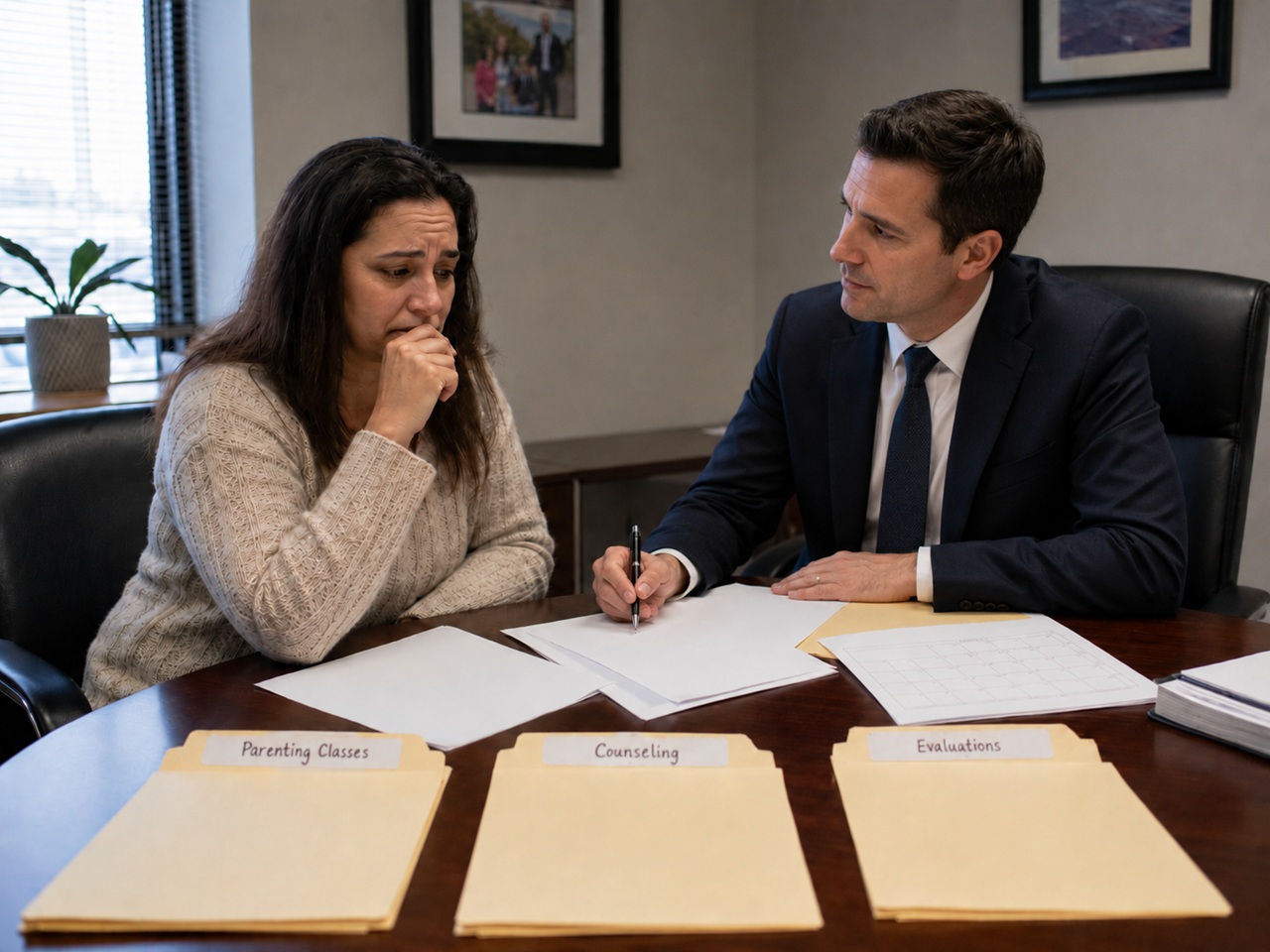
When the Division of Child Protection and Permanency (DCPP) opens a case in New Jersey, most parents get hit with the same question almost immediately: What are they going to make me do? The honest answer is that DCPP can require a lot. Parenting classes, drug testing, counseling, anger management, domestic violence programs, and more can all be included in a case plan. And completing those services is not optional if you want your child home.
Under N.J.S.A. 30:4C-55, DCPP must create a placement plan that includes a statement of the services the Division will provide to the parent. That plan must be put together within 60 days of a referral for child abuse or neglect, or within 30 days of a child being placed outside the home. The clock starts fast.
Our New Jersey DCPP attorneys at Williams Law Group, LLC, work with parents navigating DCPP cases throughout New Jersey. A case plan can be contested, trimmed, or challenged if the services are not reasonably connected to what DCPP identified as the problem. Here is what every parent needs to know about the services DCPP can require and what happens when they do.
What Is A DCPP Case Plan And Why Does It Matter?
A case plan, sometimes called a placement plan or service plan, is a written document DCPP creates that lays out what needs to happen before a child can safely return home or before a case can be closed. It identifies the reasons the agency became involved, the specific steps the parent must take to address those reasons, and a target timeline for achieving the goal. In most cases, that goal is reunification.
The case plan matters because it is the roadmap for your entire case. Judges review case plans at court hearings. Progress on the plan is used to measure whether reunification is on track. If DCPP wants to change the goal from reunification to adoption, the agency will point to the parents’ failure to complete services as evidence that the situation is not improving. Completing services is not just a bureaucratic checkbox. It is often the difference between getting your child back and losing parental rights.
DCPP is also required by law to involve parents in developing the case plan. That means you are not simply handed a list of demands. You have the right to participate in the process, to raise concerns about specific services, and to have your input considered. That participation matters most when you have an attorney helping you understand what is reasonable and what is not.
What Services Can DCPP Include In A Case Plan?
The services DCPP includes in a case plan are supposed to be directly connected to the reasons the agency opened the case in the first place. A case opened because of substance abuse should result in different services than one opened because of domestic violence or housing instability. In practice, the range of services is wide.
Services that commonly appear in New Jersey DCPP case plans include:
- Parenting classes: These are among the most frequently required services regardless of the specific allegations. The classes are designed to teach child development, discipline techniques, and age-appropriate expectations. They range from a few sessions to multi-week programs.
- Substance abuse evaluation and treatment: If the case involves allegations of drug or alcohol use, DCPP will typically require a substance abuse evaluation by a Licensed Clinical Alcohol and Drug Counselor (LCADC). Depending on the results, the parent may be required to complete outpatient treatment, intensive outpatient treatment, or even residential treatment.
- Drug testing: Random or scheduled urine screens are a standard feature of cases involving substance use concerns. Refusing to test is treated as a positive result by DCPP.
- Psychological or psychiatric evaluation: In cases involving mental health concerns, DCPP may require a formal evaluation to assess a parent’s mental health status and treatment needs. This evaluation can carry significant weight in the case and should not be approached without legal guidance.
- Individual or family therapy: Counseling aimed at addressing emotional or behavioral issues identified in the case. Family therapy may be required if the goal is reunification and the parent-child relationship needs to be repaired.
- Domestic violence services: If domestic violence is a factor, services may include a batterer intervention program for the offending parent or victim counseling and safety planning for the non-offending parent.
- Housing or financial assistance: When unstable or unsafe housing played a role in the DCPP investigation, the case plan may include referrals to housing programs or financial counseling to help stabilize the family’s living situation.
This list is not exhaustive. DCPP also offers in-home services, childcare assistance, and transportation help in some cases. Every plan is different because every case is different, and the services should match the specific problems DCPP identified.
Can DCPP Force Parents To Complete These Services?
This is one of the most misunderstood aspects of the DCPP process. During the investigation phase, a caseworker has no direct legal authority to force a parent to engage in services. The parent has the right to decline. But declining rarely ends the issue. When a parent refuses services or does not cooperate with the investigation, DCPP can go to Family Court under N.J.S.A. 30:4C-12 and ask a judge to order the parent to comply.
Once a judge issues an order to comply or once a case moves into litigation, completing services is no longer a choice. It becomes a court-ordered obligation. Parents who ignore court-ordered services face consequences that go far beyond the inconvenience of attending classes. A court can find that the parent is not making reasonable efforts toward reunification, which can accelerate the timeline toward a change in permanency goal.
Don’t underestimate the complexity of your case. Even though a caseworker cannot physically force a parent to engage, the practical consequences of refusing can be serious. Often, the right approach is not to refuse and fight it out later. The right approach is often to get legal guidance early, understand what is actually required, and to engage with services strategically, with an attorney advising you every step of the way.
What Happens If A Parent Does Not Complete Required Services?
If DCPP presents a parent with a case plan and the parent does not follow through, the agency tracks that failure and brings it to the court’s attention. At every permanency hearing (a court review held to assess whether the plan for the child is on track), the judge will want to know what progress the parent has made. A parent who has not engaged with services at all, or who has started and stopped, will have a very difficult time at those hearings.
New Jersey law requires DCPP to file for termination of parental rights when a child has been in foster placement for 15 of the last 22 months, unless there is a specific reason not to. Failure to complete services is often the primary justification DCPP uses to show that the parent cannot remedy the conditions that led to placement within that timeframe. Once that argument is in front of a court, it is very hard to overcome without a strong record of service completion.
Parents who have a genuine barrier to completing services, such as work schedules, transportation problems, or a provider being unavailable, should communicate those barriers to their caseworker and document them in writing. DCPP is required to help facilitate services, not just demand them. If the agency has not taken reasonable steps to connect a parent with available services, that failure can become an important issue in the case. An experienced attorney can identify and document those gaps.
What Are The Most Common Services DCPP Requires, and What Do They Actually Involve?
Many parents agree to services without fully understanding what they are signing up for. Some services have real consequences if they go poorly. Here is a closer look at the four services that appear most often in New Jersey DCPP cases and what parents should know going in.
Before starting any of these services, you should speak with an attorney about:
- Substance abuse evaluations: The evaluation is not just a meeting. It includes formal tests administered by an LCADC. The results determine whether DCPP recommends outpatient counseling, intensive outpatient treatment, or residential placement. If you dispute the results, you have the right to seek a second evaluation. The evaluation itself is not the same as treatment, and a positive finding for addiction does not automatically mean losing custody.
- Psychological evaluations: This evaluation assesses mental health diagnoses, cognitive functioning, and parenting capacity. It is often the most consequential service in a case because the evaluator’s findings can be used directly in court. Parents should ask about the evaluator’s qualifications and neutrality. A parent’s attorney can often raise legitimate challenges to the conclusions if the evaluation process was flawed.
- Batterer intervention programs: These are court-approved programs specifically for people who have committed domestic violence, not simply anger management courses. New Jersey has approved providers, and DCPP is required to refer parents to approved programs. A general anger management class is not a substitute and will not satisfy DCPP’s requirement.
- Parenting classes: These vary widely in length, format, and intensity. Some are informational, others are skills-based and interactive. Completing the class is only part of what DCPP is looking for. The agency also expects parents to demonstrate that they have internalized what they learned, which caseworkers assess through home visits and observations.
Understanding exactly what each service involves, what the evaluator or provider will report back to DCPP, and how to engage strategically gives parents the best chance of moving through their case plan successfully.
Can Parents Challenge Services That Seem Unreasonable Or Unnecessary?
Yes. Parents have the right to push back on services that are not connected to the reasons DCPP opened the case. If the case involves a housing concern and DCPP is demanding a psychological evaluation, that demand may not be justified. If the allegations involved a one-time incident and DCPP is requiring a year-long treatment program, the intensity of the service may not match the facts of the case.
Challenging a service through the right channels is very different from simply refusing to engage. A parent who refuses to look uncooperative. A parent who, through counsel, formally objects to a specific service and asks DCPP to justify why that service is necessary and proportionate to the concern identified looks like someone who is actively engaged and taking the process seriously. Those two approaches have very different effects on how a judge views the case.
Often, the best time to raise concerns about a case plan is early, at the point when the plan is being developed, not after months have passed. Challenging a service through the right channels is very different from simply refusing to engage. A parent who refuses to look uncooperative. A parent who, through counsel, formally objects to a specific service and asks DCPP to justify why that service is necessary and proportionate to the concern identified looks like someone who is actively engaged and taking the process seriously. Those two approaches have very different effects on how a judge views the case.
An attorney can review the plan, identify services that appear disproportionate or not tied to the stated concerns, and raise those objections in court before they become entrenched requirements. Waiting until a permanency hearing to challenge a service that has been in the plan for a year is a much harder fight.
How Can A New Jersey DCPP Attorney Help Me?
A DCPP case plan is not a document you should read alone and then decide what to do. Every service on that plan has consequences. Some services, like psychological evaluations, can generate findings that follow you through the entire case. Others, like drug testing, create a paper trail that DCPP will use in court. Having an attorney review the plan before you engage with any service is one of the most important steps you can take.
Our New Jersey DCPP attorneys at Williams Law Group, LLC, represent parents in DCPP cases throughout New Jersey. Attorney Alvin Eugene Richards III devotes the majority of his practice to child welfare matters. He works with parents from the very beginning of a case to make sure the services they are asked to complete are fair, connected to the actual allegations, and approached in a way that protects their rights.
If you are facing a DCPP case plan, contact us to speak with one of our New Jersey DCPP attorneys today. We have the knowledge, the skills, and the experience you need to deal with your complex DCPP case. Our law firm serves families throughout the state from our offices in Parsippany, Short Hills, Hoboken, Tinton Falls, Cranford, and Saddle Brook. Williams Law Group, LLC – your firm for life.
"I would recommend this Law firm to anyone. I had a stressful case, once I left that office and knew that the people would be handling my case and treated my case as a priority, I knew I was in good hands. I've had the same case for about 4 years with DCP&P they would bully me beyond belief, I was scared stressed and knew I had to look for a good law firm to handle this case. Within the time I hired the firm in October until now.... I had complete trust that they had myself and my son in the best hands. I would not look elsewhere for a very professional law firm... the lawyers and the staff cared about what happened to the families and the child. Thank you so much for all you've done for my case." – C.B., ⭐⭐⭐⭐⭐