
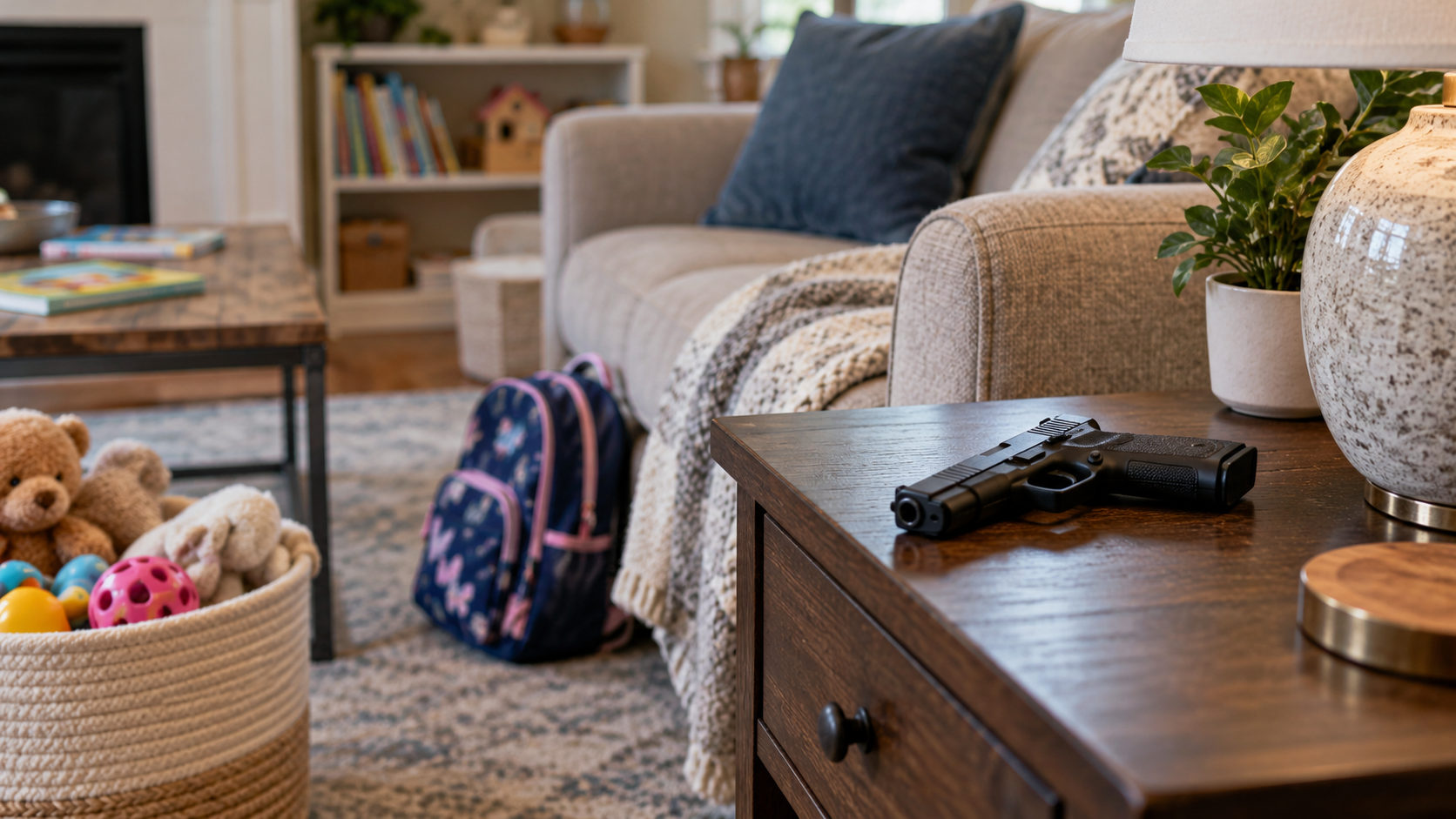
Unsecured Firearms Can Trigger A Child Protection Investigation
Many New Jersey families keep a firearm at home for personal protection, hunting or sport. Yet a gun left in a nightstand or on a closet shelf can draw the attention of the Division of Child Protection and Permanency (DCPP). Who would report it? Does the gun have to be loaded to cause a problem? And what happens if a caseworker decides the children were at risk?
Federal health officials have studied how often unsecured guns end up in the hands of children. A Centers for Disease Control and Prevention (CDC) report on unintentional firearm deaths of children found the gun was stored unlocked in about 76 percent of cases where storage details were known. Nearly half of the firearms in these deaths belonged to a parent of the child who fired the shot.
So how can a single report about a firearm turn into a full DCPP investigation? Our New Jersey DCPP defense attorneys at Williams Law Group, LLC represent people dealing with these complex legal issues throughout the state. Our work includes defending parents during DCPP investigations and abuse or neglect cases. As a result, we understand how caseworkers may view a firearm inside a home with children.
|
Key Facts
|
Why Would DCPP Investigate A Firearm In The Home?
New Jersey law places a duty on everyone, not just professionals, to report suspected child abuse. Under New Jersey Statutes Annotated (N.J.S.A.) 9:6-8.10, any person with reasonable cause to believe a child has been abused must report it to DCPP right away. That broad duty means a report about a gun can come from many directions, including teachers, doctors, neighbors and relatives.
A child may mention a gun to a teacher or school counselor. A pediatrician may hear about a firearm during a routine checkup. Police officers who respond to an unrelated call may notice a handgun sitting on a table or counter. In some families, the report comes from the other parent during a heated custody dispute.
A report alone does not mean DCPP will find abuse or neglect. Still, any report involving a firearm and children can prompt a quick response. The DCPP investigation process usually includes interviews with parents and children and a look at the home itself. What the caseworker sees during that visit can shape the rest of the case.
What Does New Jersey Law Say About Storing Guns Around Children?
New Jersey has a child access law, N.J.S.A. 2C:58-15, that covers a person who knows or reasonably should know a minor is likely to gain access to a loaded firearm at a home under that person's control. A disorderly persons offense (a lower-level offense under state law, punishable by up to six months in jail) can apply if a minor gains access, unless the owner took one of these steps:
- Locked Box or Container — Storing the firearm in a securely locked box or container, such as a gun safe or lockbox.
- Secure Location — Keeping the firearm in a location that a reasonable person would believe to be secure.
- Trigger Lock — Securing the firearm with a trigger lock, a device that blocks the trigger so the gun cannot fire.
Under this law, a minor means a person under the age of 16. The statute does not apply when a minor uses a firearm lawfully under N.J.S.A. 2C:58-6.1 or gets the gun through an unlawful entry by any person. A criminal charge is also separate from a DCPP case. A child protection investigation can move forward whether or not police ever file charges.
When Can An Unsecured Gun Count As Neglect?
DCPP cases rely on a different law than criminal cases do. Under N.J.S.A. 9:6-8.21, a child may be considered abused or neglected when a parent fails to exercise a minimum degree of care in providing proper supervision. The failure must harm the child or place the child in imminent danger of harm. Exposing a child to a substantial risk of harm can also qualify.
New Jersey courts have explained that a minimum degree of care refers to conduct that is grossly or wantonly negligent, though not necessarily intentional. This standard asks more than whether a parent made an ordinary mistake. It looks at whether a reasonable parent would have recognized the danger and still failed to protect the child.
In New Jersey Division of Child Protection & Permanency v. E.D.-O., the New Jersey Supreme Court said courts must look at the totality of the circumstances in these cases. No single fact decides the outcome. A child does not have to be hurt for a neglect finding to stand. The question is whether the child faced imminent danger or a substantial risk of harm.
Which Details Can Shape A Caseworker's View Of A Gun In The Home?
No checklist decides every firearm case. However, certain details about how and where a gun was kept may weigh heavily when DCPP decides whether a child faced real danger. These details often surface during interviews with the children and a walk-through of the home:
- Whether the Gun Was Loaded — A loaded firearm with ammunition close by may raise more concern than an unloaded gun stored away from its ammunition.
- Where the Gun Was Kept — The CDC found that unlocked guns used in fatal child shootings most often came from nightstands, beds or mattresses.
- The Child's Age and Knowledge — A child who knew where the gun was hidden, or who had handled it before, may suggest a greater risk.
What a parent does after the report can matter too. Buying a gun safe, adding trigger locks or moving firearms out of the home may show the risk has been addressed. These steps do not erase what happened before. Even so, they can become part of the record a caseworker reviews before deciding how to close the investigation.
What Happens During A DCPP Firearm Investigation?
A DCPP caseworker usually starts by visiting the home and speaking with the parents. The caseworker may also interview the children, sometimes at school. Many parents are unsure whether they must let a DCPP caseworker into the home. How a parent handles that first visit can affect how the rest of the investigation unfolds.
DCPP may ask a parent to agree to a safety plan while the investigation continues. In a firearm case, that plan could involve locking up the gun or removing it from the home. Signing a safety plan can carry consequences, so a parent may want legal advice before agreeing to its terms.
At the end of an investigation, DCPP reaches one of four findings. A finding of substantiated, established, not established or unfounded can affect a parent in very different ways. Learning what each child welfare investigation finding means can help a parent understand what is at stake before the case closes.
The table below explains what each finding means.
| Finding | What It Means |
|---|---|
| Substantiated | DCPP found abuse or neglect, and the circumstances call for the most serious finding |
| Established | DCPP found abuse or neglect, but the facts do not support a substantiated finding |
| Not Established | DCPP did not find abuse or neglect, but evidence shows the child was harmed or placed at risk |
| Unfounded | DCPP found no abuse or neglect and no evidence the child was harmed or placed at risk |
Can A Firearm Investigation Affect Custody Or A Divorce?
A DCPP case involving a gun can spill into family court. When judges decide child custody, N.J.S.A. 9:2-4 now treats a child's safety as a threshold issue they must address before other factors. Concerns about firearm storage can fit within that safety analysis.
The other parent may raise the investigation during a divorce or a later custody dispute. Records from the DCPP case could become part of the evidence. Even a case that closes without a substantiated finding may still lead to questions about how firearms are stored during parenting time.
A substantiated finding carries added weight. Under N.J.S.A. 9:6-8.11, DCPP keeps a central registry of child abuse reports, and a substantiated finding can place a parent in the Child Abuse Registry. Parents who disagree with a finding may be able to challenge it, though strict deadlines apply. Learning how to appeal a DCPP finding early can help protect a parent's rights.
Getting Ahead Of A DCPP Firearm Investigation
Responding to a DCPP investigation over a firearm in your home often involves complex legal rules many people might not completely understand. A single conversation with a caseworker can shape the outcome. You may also worry about your children, your parental rights and how the case could affect custody down the road.
The DCPP defense attorneys at Williams Law Group, LLC represent clients throughout the state. We can prepare you for interviews, review any safety plan before you sign it and gather evidence that shows your home is safe. If DCPP substantiates a finding against you, we can challenge it and work to protect your record.
Your family deserves a fair process from start to finish. We can review your situation, explain your options and help you create a plan to protect your children and your parental rights. Contact us to schedule a consultation and get guidance before your next conversation with DCPP.
“They gave detailed explanation of the process. They gave support and comfort in a very scary situation. They helped me remain calm.” – Wendy C., ⭐⭐⭐⭐⭐