
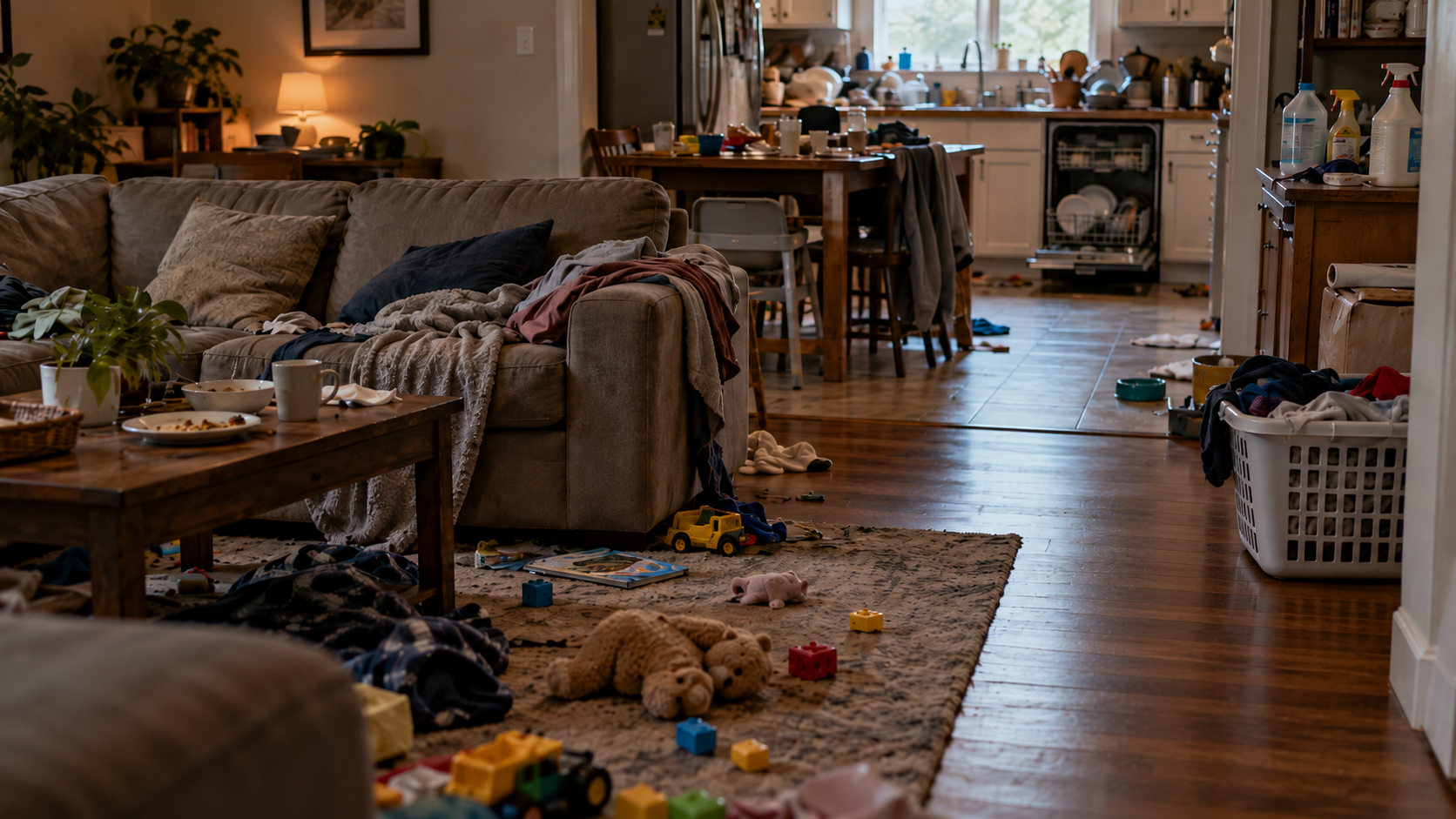
How DCPP Separates A Messy House From An Unsafe One
Piles of laundry, a sink full of dishes or a broken window can make any home look rough at the end of a long week. Could those conditions lead the Division of Child Protection and Permanency (DCPP) to label a parent neglectful? What happens if a caseworker arrives without warning? And does it matter if a family simply cannot afford repairs?
The New Jersey Department of Children and Families defines neglect to include failing to provide adequate food, clothing, shelter, education or medical care although financially able or assisted to do so. The department also says an investigator will respond within 24 hours when a report indicates a child may be at risk. That means a home visit can happen quickly.
So when does a messy home cross a legal line? And what happens when a messy house is wrongly interpreted as neglect? Our New Jersey DCPP defense attorneys at Williams Law Group, LLC represent people dealing with these complex legal issues throughout the state. Our work includes defending parents accused of neglect based on the condition of their homes. As a result, we understand how caseworkers and judges may evaluate a family's living conditions.
|
What Parents Should Know
|
What Does New Jersey Law Say About Neglect And A Child's Home?
New Jersey defines an abused or neglected child in New Jersey Statutes Annotated (N.J.S.A.) 9:6-8.21. One part of that definition covers a parent who fails to exercise a minimum degree of care in supplying a child with adequate food, clothing, shelter, education or medical care. Shelter is the part of the law most closely tied to the condition of a home.
That same section includes an important limit. The failure must happen even though the parent was financially able to provide for the child or was offered financial or other reasonable help to do so. Another part of the statute covers parents who fail to provide proper supervision and expose a child to a substantial risk of harm.
New Jersey courts have said a minimum degree of care refers to conduct that is grossly or wantonly negligent, though not necessarily intentional. An ordinary lapse in housekeeping usually falls short of that standard. The more serious question is whether a reasonable parent would have recognized the danger in the home and still failed to protect the child.
Can A Messy Or Cluttered Home Alone Lead To A Neglect Finding?
A home does not have to be spotless to be safe. Under New Jersey law, DCPP must show that a child's physical, mental or emotional condition has been impaired or is in imminent danger of becoming impaired. Dirty dishes, toys on the floor and unmade beds rarely meet that test on their own. The key question is whether the child faced real danger.
In New Jersey Division of Child Protection and Permanency v. B.P., the New Jersey Supreme Court applied this standard. That case involved the part of the statute covering food, clothing and shelter. The Court vacated a neglect finding because the child's needs were met and nothing showed the child was impaired or in imminent danger of being impaired.
That ruling did not involve a messy home. Still, it shows how closely courts may examine whether a child actually faced danger. A caseworker's discomfort with clutter or dirt is not the same as proof of neglect. DCPP still carries the burden of proving its case with credible evidence about the child's condition and the risks inside the home.
Which Home Conditions May Raise Concerns For DCPP?
Some living conditions go well beyond ordinary mess and can create potential hazards for young children. When a caseworker visits, certain problems may draw closer attention because they can lead to injury, illness or worse. Conditions that may become the center of a neglect investigation include:
- Fire and Electrical Hazards — Exposed wiring, blocked exits or space heaters placed near bedding may raise concerns about fire and serious injury.
- Pests and Spoiled Food — Roach or rodent infestations, rotting food and animal waste may suggest health risks for children living in the home.
- Missing Utilities — A home without heat, running water or working electricity for an extended period may raise questions about adequate shelter.
- Dangerous Items Within Reach — Medications, cleaning chemicals, drugs or weapons left where young children can reach them may create a risk of serious harm.
Unsafe sleeping arrangements can draw attention too, especially when infants are involved. The age of the children often matters as well. A hazard that poses little danger to a teenager may pose a much greater risk to a crawling toddler. A caseworker may also look at whether the conditions appeared recently or have lasted for months.
Does Poverty Count As Neglect In New Jersey?
No. Poverty alone should not be treated as neglect. The language in N.J.S.A. 9:6-8.21 ties the failure to provide adequate shelter to a parent who was financially able to do better. A parent who lives in a run-down apartment because of a low income is in a very different position than a parent who refuses to address a dangerous condition.
The statute also covers parents who were offered financial or other reasonable help. That detail can change the analysis. If DCPP or another agency offered assistance, such as help with housing or utilities, and a parent turned it down, the agency may argue the conditions were no longer caused by poverty alone. Records of those offers can become important evidence.
Parents who rent may face another challenge. A landlord may be responsible for problems such as broken heat, leaks, mold or pest infestations. Proof that a parent reported those problems and asked for repairs can help show the parent did not ignore the danger. Keeping copies of texts, emails and repair requests can make a difference.
The table below shows records that can help a parent respond to a neglect claim.
| Record | What It Can Show |
|---|---|
| Repair requests to a landlord | The parent reported problems such as broken heat, leaks or pests |
| Photos taken after cleanup or repairs | Hazards were fixed and the home is safe now |
| Utility shutoff notices and assistance applications | Missing utilities stemmed from financial hardship, and the parent sought help |
| Pediatrician and school records | The children are healthy, fed and attending school |
What Happens When A Caseworker Inspects Your Home?
A home visit is often the heart of a neglect investigation based on living conditions. The caseworker may want to see where the children sleep, eat and play. Many parents wonder whether DCPP needs a warrant to search their home. Several steps may happen during or after the visit:
- Walk-Through of the Home — The caseworker may look at bedrooms, the kitchen, bathrooms and other areas where children spend time.
- Photographs — Pictures of the home may become part of the investigation record and could later appear as evidence in court.
- Interviews — The caseworker may speak with the parents, the children and others such as relatives, teachers or neighbors.
- Follow-Up Visits — DCPP may return to check whether problems have been fixed or whether conditions have improved since the first visit.
Fixing hazards quickly can help, though it does not erase what a caseworker already observed. A clean, safe home at a follow-up visit can show the problem was temporary. The agency also weighs many details before deciding a case. Understanding what DCPP considers when deciding whether to close or escalate a case can help parents prepare.
Possible Outcomes After DCPP Reviews Your Home
At the end of an investigation, DCPP reaches one of four findings. These are substantiated, established, not established and unfounded. A substantiated finding is the most serious. It can place a parent in the Child Abuse Registry, which may affect jobs working with children, foster care and adoption.
In more serious situations, DCPP may decide a child cannot safely stay in the home. Parents often ask whether DCPP can remove a child without a court order. Removal is usually reserved for cases involving immediate danger. Even so, the possibility shows why a parent should treat any home inspection as a serious legal matter.
Parents who disagree with a finding may be able to challenge it, though strict deadlines apply. Appealing child protection investigation findings can help protect a parent's record, career and family. Acting early also gives a parent more time to gather photos, repair records and other proof that the home is safe.
Defending Your Family Against Unsafe-Home Claims
A DCPP neglect investigation based on the condition of your home often involves complex legal rules many people might not completely understand. A few photos taken on a bad day can shape how a caseworker views your entire family and your child's living situation. You may also feel embarrassed or overwhelmed, especially if money problems or a difficult landlord are part of the picture.
The DCPP defense attorneys at Williams Law Group, LLC represent clients throughout the state. We can prepare you for home visits, gather photographs and repair records and show the difference between a messy home and a dangerous one. If DCPP substantiates a finding, we can challenge it and fight for your rights.
Your home and your family deserve a fair and accurate review. We can review your situation, explain your options and help you create a plan to protect your children and your parental rights. Contact us to schedule a consultation before your next meeting with a DCPP caseworker.
“Highly Recommended. 1000% Satisfied. Allison helped my family when we thought there was no hope. She was very supportive, professional, and did everything in her power to resolve our situation and we would highly recommend her.” – Carolyn M., ⭐⭐⭐⭐⭐